
Author: Kathryn Delaney, BS, BA, CCA, CCH, CN
As a nutritionist, herbalist, aromatherapist, and gardener… I relish life’s learning through observation of the natural world, particularly from plants.
Plants get everything that they need from their natural environment. They also adjust to their environment constantly to exist there. They do this by amping up their defense mechanisms. If they are aromatic in nature, one of their defenses is in manufacturing varying amounts of constituents that we have named “essential oils.” These compounds aren’t just something to use therapeutically by humans, they are part of the plants’ defense system. The constituents protect plants from being eaten by insects and animals, and the compounds get stronger and more pronounce depending on changes in weather conditions, nutrients, and water that the plant has access to. (We can understand a lot about what helps a plant grow by looking to the environment that it natively thrives in.)
Interestingly enough, if you take two cuttings of the same plant, and grow them at two different elevations for seven years, they will have a variance in their constituents, and have scent profile differences that are noticeable, as well as constituent differences that are measurable.
It is also an interesting thing to note, while working at a plant nursery and observing herbal plants grow over several years, which are by their nature aromatic, they suffered when grown in the greenhouse under a consistent temperature, and thrived when they were grown outdoors, with access to fluctuations in temperature, wind, and dappled sunshine.
One thing that every plant needs is sunshine particular to its species’ light demands. This is how it is able to make energy to live and survive. (Most plants suffer indoors because they aren’t placed in the right amount of light, or because they are given too much or too little, water. They often don’t flower if they aren’t given fertilizer as food.)
Interestingly enough, we as humans need sunshine, water, and food too, in order to thrive. We also need exercise as we have the added evolutionary experience of having skeletal, muscular, cardiovascular, digestive and additional other body systems that separate us evolutionarily from the plant kingdom. What is interesting in regard to our similarity with plants is that we need sunshine, we literally make one of our essential vitamins when our skin is exposed to its ultraviolet rays: Vitamin D.
Vitamin D, was discovered in the early 19OO’s in Great Britain when doctors were researching the pathological basis of rickets, a deforming bone disease.
The first clear descriptions of this disease were in the 17th century, but it was also recognized in earlier medical writings from the Roman and Greek eras, and even earlier in First and Second centuries A.D. The cases of rickets increased significantly from the 17th -19th centuries, coinciding with the industrial revolution. Factors that were considered to contribute to increased cases of rickets, included: working indoors in facilities that were over-crowded, poor air quality, and possibly decreased calcium in the diet, due to the expense of dairy and subsequent increased role of bread in the diet.
The doctor noted for discovering vitamin D, is Sir Edward Mellanby, whom was taken by the work of McCollum, who in 1913 discovered Vitamin A and ushered in the era of understanding food substances that could support life. Mellanby considered that rickets may be due to dietary deficiency and did an experiment where he mimicked the diet of a population with highest incidence of rickets (a diet high in oatmeal), and fed it to dogs that he had incidentally kept indoors and away from sunlight. Mellanby discovered that not only was this diet able to reproduce rickets in the dogs, he also learned that he could cure the disease with the supplementation of cod liver oil and presumed that the cure was due to the vitamin A present in the oil. McCullum wanted to test this theory, and bubbled oxygen through the cod liver oil to destroy the vitamin A. He found that while the oil that had the vitamin A removed was no longer able to treat vitamin A deficiency, it retained the ability to cure rickets. McCullum then concluded that the factor that cured the rickets was a new vitamin, which they called Vitamin D.
While Mellanby and McCullum were discovering vitamin D within food sources, a physician in Vienna, Huldshinsky, had discovered that children suffering from rickets could be cured by exposing them to sunlight during summer months, or to artificially produced UV light. Due to the shifts of the Sun’s zenith through the year, the highest amount of vitamin D is produced during a spectrum of light during midday in the summer. Sunlight is the most efficient way for most people to produce vitamin D, however modern lifestyles have greatly impacted our ability to do so.
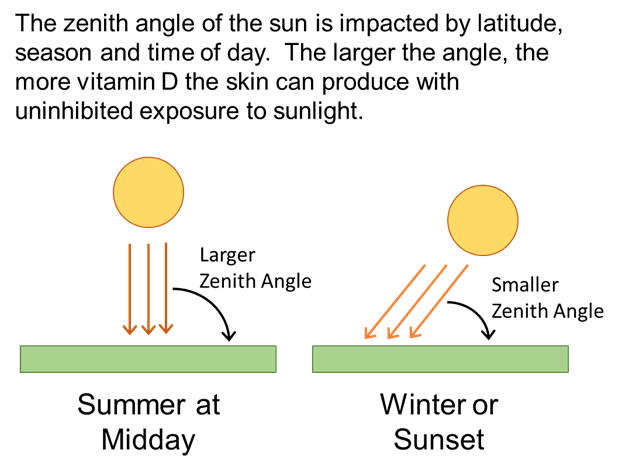
While it has been shown that rickets can be prevented with universal supplementation of 400IU of vitamin D and exposure to sunlight, the disease continues to be a concern in modern times amongst uneducated populations, as well as in northern regions where due to cooler temperatures, people have less skin exposed to the sun, and also in those populations with darker skin pigmentation, due to their slower production of vitamin D due to higher levels of melanin.
Since its discovery, Vitamin D has been observed to act more as a hormone and recognized for its role in multiple systems of the body, including playing roles in: Calcium and phosphorus metabolism (health of bones, teeth, etc.), muscle strength (preventing falls in the elderly), supporting mood (relieving depression, and Seasonal Depression, etc), lowering inflammation, supporting insulin function (for those with type 2 Diabetes, or with insulin resistance), preventing diseases (cancer, auto-immune diseases), regulating gene expression, protecting from gene damage, and supporting the immune system.
There is a reason why some vitamins and nutrients are called “essential,” when we are deficient in them our bodies are lining up to be sucker-punched by illness, and even knocked out, in time.
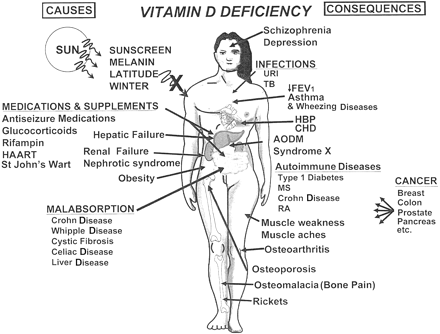
Deficiency of vitamin D is associated with: all causes of mortality (read that again), auto-immune conditions, leaky gut, several cancers (breast, colon, prostate, bladder and ovarian), inflammatory bowel disease (crones, ulcerative colitis), hypertension, Type 2 Diabetes, Depression, Osteoporosis, Osteopenia, stroke, heart attack, tinnitus, and many more.
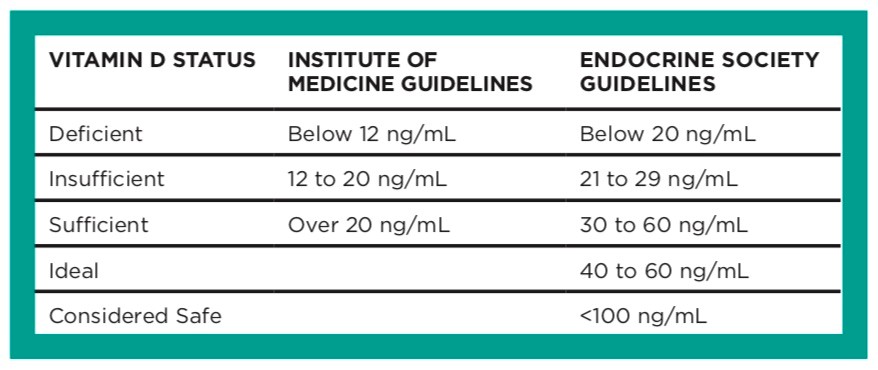
Vitamin D deficiency is highest with in the populations of the elderly, and those who are institutionalized or hospitalized. It is also significantly more common among those with no college education, the obese, people with poor health status, those with hypertension, low high-density lipoprotein cholesterol level, and those who are not consuming milk daily. It is also more common in populations with darker skin pigments due to the increased amount of melanin in their skin, which protects their skin from UV light and inherently reduces the production of vitamin D in their skin.
The only way to measure vitamin D levels is by getting bloodwork done. A healthcare provider may have ordered a vitamin D test if you have signs of deficiency. Vitamin D deficiency is most often treated through supplementation and/or dietary changes.
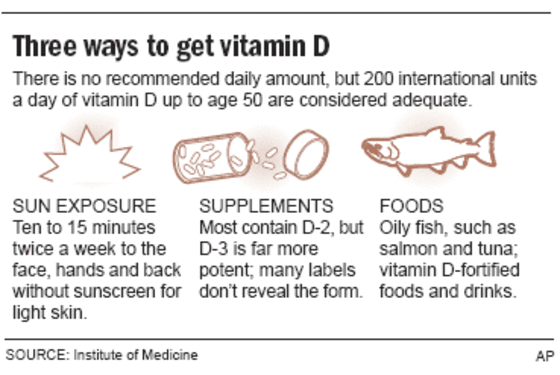
When our body is replete with vitamins and nutrients, it stands against attacks of illness and can even get stronger in its defenses.
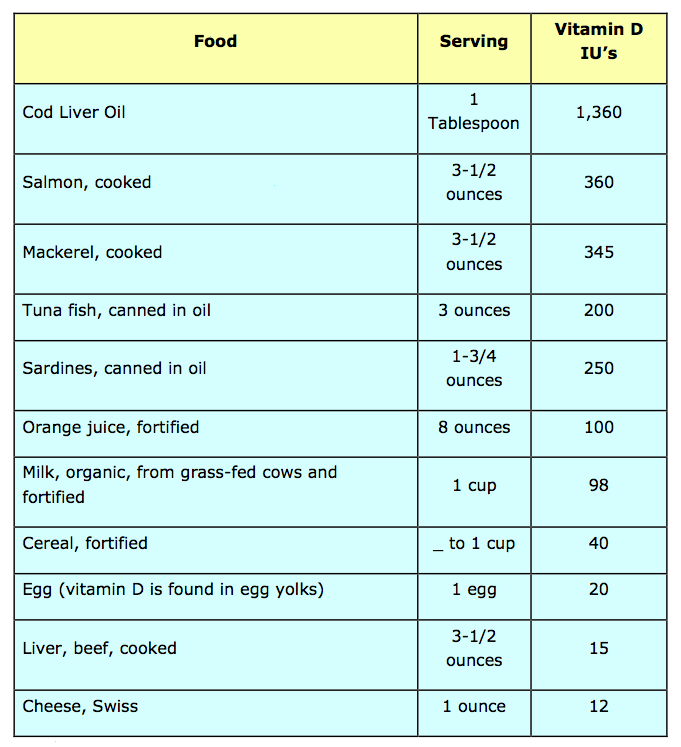
Foods that contain vitamin D, include: cod liver oil, swordfish, salmon, canned tuna, beef liver, egg yolks, and sardines. It is said that in order to consume enough vitamin D through your diet, you would have to eat one of the listed items every day.
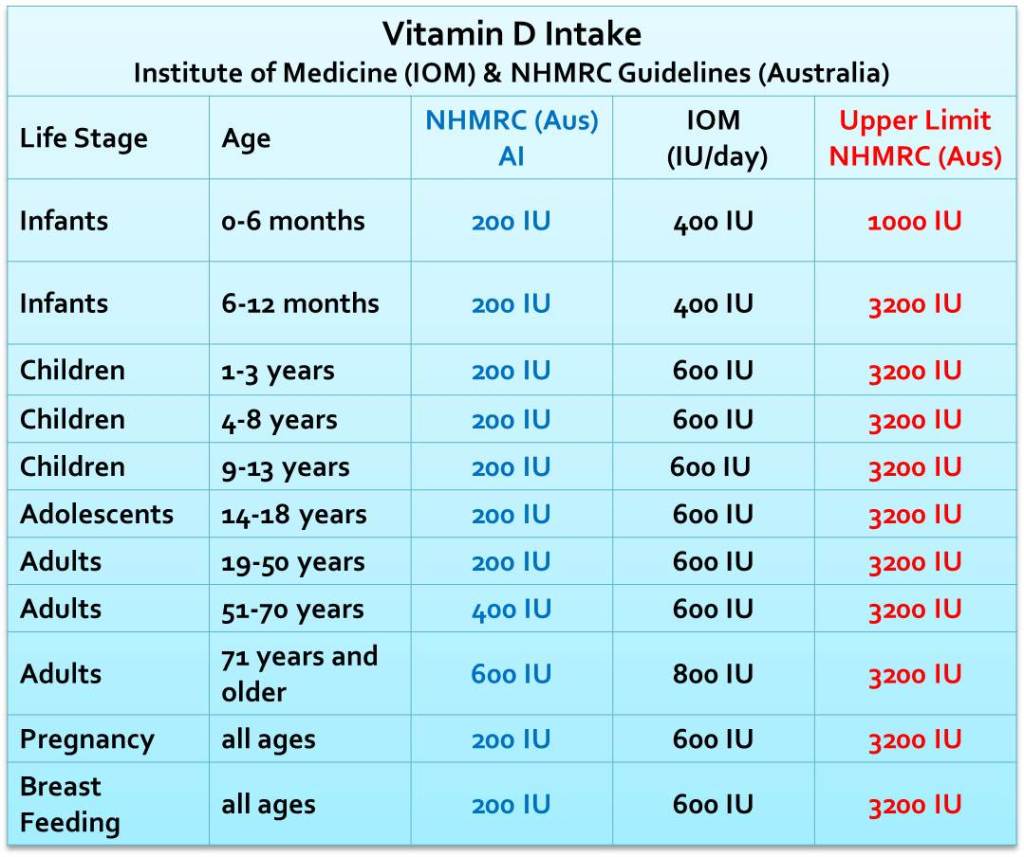
While sunshine or food may appear to be the most accessible way to produce vitamin D, supplementation may be the most convenient depending on working conditions and geographical location. Adequate levels of vitamin D supplementation for people of different age groups can be found in the following graph.
Vitamin D is a fat-soluble vitamin that is stored within the fat cells of the body during summer months when skin is exposed to the sun. Over the course of the last several years there has been an observed correlation with a decrease in vitamin D levels and increased number of bone breakages in early spring, in addition to a surge in respiratory ailments. This lends to the importance of supplementation of vitamin D during winter months especially for those who do not consume dairy, liver, or fish oils.
This last year there have been increasing number of documents drawing a high correlation between deaths due to CoVid and vitamin D deficiency, which lends to the rational of supplementation with this vitamin as a preventative means. While pharmaceutical companies press for mandated vaccines, there is increasing support throughout the globe for universal supplementation of vitamin D for ultimate global health.
Robertson, Sally. July 2, 2020. More evidence on vitamin D deficiency and death rates from COVID-19 (news-medical.net)
Benskin, Linda. September 2020. Frontiers | A Basic Review of the Preliminary Evidence That COVID-19 Risk and Severity Is Increased in Vitamin D Deficiency | Public Health (frontiersin.org)
George Griffin, Martin Hewison, Julian Hopkin, Rose Kenny, Richard Quinton, Jonathan Rhodes, Sreedhar Subramanian and David Thickett Vitamin D and COVID-19: evidence and recommendations for supplementation. Published:01 December 2020https://doi.org/10.1098/rsos.201912
It is important to note that in addition to vitamin D playing a pivotal role in the foundations of our health, the additional allies of Zinc, Vitamin A, Vitamin C, Vitamin E and Selenium also have a great influence, as well as a number of herbal, medicinal mushrooms, and nutritional remedies. As time progresses and more studies are done globally, information is revealing that the true essentials to our wellness and ultimate health, rely on the staples of life: sunshine, exercise, clean water and air, loving relationships and proper nutrition.
It would appear that while we have evolved to have much more complex physiologies than plants, we have many similarities in respect to what it takes to thrive. Nature holds the answer.
Please subscribe for access to more articles on health and wellness.
You are welcome to receive 30% off of all vitamins and supplements, and health care products, from more than 100 quality companies by registering HERE.
References
Benskin, Linda. September 2020. Frontiers | A Basic Review of the Preliminary Evidence That COVID-19 Risk and Severity Is Increased in Vitamin D Deficiency | Public Health (frontiersin.org)
DeLuca, Hector F. History of the discovery of vitamin D and its active metabolites. BoneKEy Reports: Nature Publishing Group https://www.ncbi.nlm.nih.gov/pmc/articles/PMC3899558/#!po=0.675676
George Griffin, Martin Hewison, Julian Hopkin, Rose Kenny, Richard Quinton, Jonathan Rhodes, Sreedhar Subramanian and David Thickett Vitamin D and COVID-19: evidence and recommendations for supplementation. Published:01 December 2020https://doi.org/10.1098/rsos.201912
Robertson, Sally. July 2, 2020. More evidence on vitamin D deficiency and death rates from COVID-19 (news-medical.net)
Graphics
Brown, Bill. November 30, 2018. Here’s How to Know If You’re Getting Enough Vitamin D | Arena District Athletic Club (arenaathletic.com)
https://www.hcs.harvard.edu/hghr/online/hypovitaminosis-d/
Three Ways to get vitamin D. Too little sun as bad as too much? (nbcnews.com)
Vitamin D Supplement Levels. www.nutridesk.com.au/get_content_html.php?cpid=17576
Food Sources of Vitamin D – it’s vital for good health (solar-facts-and-advice.com)
Why You Need Vitamin D | INTEGRIS Health (integrisok.com)
***
Kathryn Delaney is a writer and educator with Bachelor’s degrees in Journalism, and Environmental Society & Policy, as well as Certifications in the fields of Clinical Aromatherapy, Herbalism and Nutrition. She has also developed an educational App called: Esenta, the Aromaticum App, available for iOS systems. For more information on services and products, please visit the services page, or contact rootsofalchemy@gmail.com

 Roots of Alchemy
From the start of Covid firm empirical evidence pointed to vitamin D’s preventive benefit. Many other natural remedies, both as a preventative and/or treatment, soon showed strong clinical benefits against Covid.
However, they all got heavily censored and suppressed, even now, that a perceptive 10 year old can see, and could see from the start, that Covid-19 has nothing to do with real science (ie, it’s a scam).
Here is WHY even most so-called intelligent people still CANNOT figure that out… read “The 2 Married Pink Elephants In The Historical Room –The Holocaustal Covid-19 Coronavirus Madness: A Sociological Perspective & Historical Assessment Of The Covid “Phenomenon”” by Rolf Hefti at https://www.rolf-hefti.com/covid-19-coronavirus.html
“Finding individuals who can think for themselves now is like finding diamonds in a sewer.” (Unknown)
LikeLiked by 1 person