Essential Oils are wonderful allies in the home when diluted properly and used with caution and care. While in the West we often falter to the “more is better” mentality, it is important to recognize that in the instance of using essential oils, research studies have revealed quite the opposite… that using essential oil diluted into lower concentrations is often more therapeutic and effective when compared to using heavier concentrations of essential oils. In fact, there are very few specific instances where a “neat” application would be acceptable. This understanding is key when considering the large amount of plant material which is distilled to create such small volumes of essential oils, and also should lead one to reconsider the level of wastefulness of these precious substances when used undiluted and in unnecessary high concentrations.
What follows are the dilution guidelines of trained Aromatherapists. For more information on conditions which these applications would apply to, please purchase Esenta, the Aromaticum App for detailed uses and applications of more than 100 Essential Oils.
Application: Therapeutic Bath
The use of essential oils in a bath can offer relief for a variety of conditions including: irritated skin conditions, aches and pains of all sorts, stress related complaints, and can even effect one’s spirit. Offering a space in time to nurture oneself on multiple levels, baths are one of the easiest and most common ways of using essential oils that allows them to act in two ways, by absorption through the skin, and by inhalation.
Essential oils float on water, so it is necessary to use a carrier of some sort for dispersal when using them in this application so that the essential oils blend within the bath water. While some sources suggest dropping 5-10 drops of an essential oil into bath water when it is full, I would recommend against this method. This method may be safe with the more gentle of essential oils, however essential oils by their nature float on water, so rather than dispersing throughout the water, when one submerges into water the essential oils will thinly coat the skin. In instances of using peppermint essential oil by this method it has proven to be very uncomfortable. In addition to peppermint, essential oils to avoid using in this way include citrus oils, cinnamon, anise, clove, fennel and basil as they may cause sensitivity, and a prickly sensation, which may possibly develop into a rash. If the prickly sensation happens, one should remove themselves from the bath immediately, the essential oil should be washed off with soap and water, and then follow with an application of a light and gentle vegetable oil, such as jojoba, to removed the excess of oil that remains as well as to soothe the skin.
1 Tablespoon Vegetable Oil (moisturizing) – 5-10 drops essential oil
1 Cup Epson Salt (for soreness) –10 drops essential oil
1 Cup Sea Salt (detoxifying) – 10 drops essential oil
1 Cup Milk (soothing) – 12 drops essential oil
Foot and Hand Baths
Foot and Hand Baths have been shown to bring relief and be of benefit for conditions including arthritis, edema, circulation problems, irritated skin conditions, rheumatism, varicose veins, and dry skin.
Mix 5 drops of essential oil into a teaspoon of dispersant (see above) and add into tepid water. Soak hands or feet for 10 to 15 minutes and then remove, and wrap in a dry towel.
Sitz Bath
A sitz bath is a bath for the hip region of the body and can be done either in a large bowl or in a regular bath tub filled with just enough water to cover the hip area and just up to the waist area. Sitz baths have been shown to be an effective treatment for many conditions including those which effect the urinary, genital and digestive systems. Because only a small volume of water is needed for a sitz bath only 5 drops of essential oil is necessary, dispersed in a carrier, before being mixed into the bath.
Hot Sitz Baths are often used to stimulate, relax and warm areas, relieving pain in the abdominal, genital and digestive systems. Hot sitz baths are taken for 3-10 minutes and are useful for conditions such as late or painful menstrual periods, lower back pain, urinary disorders, hemorrhoids, and constipation.
Tepid Sitz Baths are useful for conditions which involve acute inflammation such as cystitis and pruritis of the anus or vulva region. Tepid sitz baths are typically taken for 15 minute periods of time.
Cold Sitz Baths are the temperature for blood congested conditions such as excessive menstrual bleeding, but can also be helpful to prevent colds and flu, as well as to promote sleep. Cold sitz baths should only be undergone for brief amounts of time, 1-3 minutes maximum.
Application: Therapeutic Flower Water
While Hydrosols of a wide variety may not be readily available, it is possible to make your own flower water by first combining 20-30 drops of essential oils with 3 ½ oz spring water or de-ionized water, then leave this mixture alone for several days and finally, strain through a coffee filter. The fragrance as well as the therapeutic properties of the essential oils will be lightly imparted into the water.
This application is often helpful as a face tonic and for the prevention and treatment of acute inflammatory skin conditions such as eczema, dermatitis and acne. With this method one can tailor the oils chosen to be properly suited for specific complexions and conditions.
Use a hydrosol. Or to make your own flower water….20-30 drops of essential oils with 3 ½ oz spring water, strain through a coffee filter after several days.
Application : Therapeutic Hair Care
There are several instances when one could benefit by adding essential oils into their hair care routine, however they can also lend assistance in acute conditions. To rid a scalp of lice or parasites, mix 5 ml of essential oil into a combination of 3 oz of distilled water and 0.5 oz vodka. This mixture can be used to condition the hair and rid it of unwanted critters.
To condition the hair, mix a blend of essential oils to a concentration of 3% into a nourishing carrier oil, such as olive oil with jojoba or argan oil. For instance, blend a total of 18 drops (roughly 1 ml) of essential oil, into 1 oz of carrier oils. Massage this oil into the scalp and wrap the hair with a warm towel to help your hair and scalp to absorb it.
Blend 1 ml (milliliter) of essential oil to 1 ounce of carrier oil for scalp treatment.
Application: Inhalation
Steam inhalation is best suited for lung, sinus, and throat conditions, however steam inhalations can also be effective remedies for the face and neck area. To use essential oils in this application add 5-6 drops of essential oil to steaming hot water. Rest the pot of hot water on a lower leveled surface, such as the floor or a lower sitting table, and then drape a towel to create a tent over the head and the steaming bowl. Make sure you close your eyes as the vapors are very intense and can irritate the eyes. Inhale slowly and deeply for five minutes, creating an opening by lifting a flap of the towel if necessary, and repeat.
Alternatively use 1-2 drops of essential oil on a hankercheif; 3-4 drops in boiled water.
Please see page on Applications for detailed information
Application: Neat (undiluted pure Essential Oils)
“Neat’ application is the undiluted use of essential oils. The use of essential oils undiluted on the skin is not a general suggested practice in aromatherapy although there are some exceptions to this basic rule. Some acute conditions may call for gentle and yet powerful oils such as lavender, which has a known history for usefulness of neat application for burns, cuts, and insect bites.
While some companies suggest that people use essential oils undiluted unless the skin reveals signs of irritation, this practice commonly leads to sensitization toward additional essential oils.
Application: Therapeutic Massage
One of the most common uses of essential oils in aromatherapy, massage can offer a range of support based on an individuals’ condition and temperament. To make a massage oil blend intended to be used in a whole body massage, combine the essential oils chosen at a total of a 1-3 % concentration, between roughly 6-18 drops of total essential oil per ounce of carrier oil, such as sweet almond or grapeseed oil.
The percentage concentration is suggested in this range because some conditions which are more pain related demand higher concentration of oils, whereas nervous conditions would call for lower concentrations of essential oil.
Using a higher dilution in topical application is only suitable when applying the higher concentrated substance in local application to a small area of the body.
Full Body: Blend at 1-3 % or roughly 3-9 drops per Tablespoon of Carrier Oil/Lotion
Localized Area: Blend at 3-5 % or roughly 9-15 drops per Tablespoon of Carrier Oil/Lotion
Application: Therapeutic Skin Lotion/ Oil
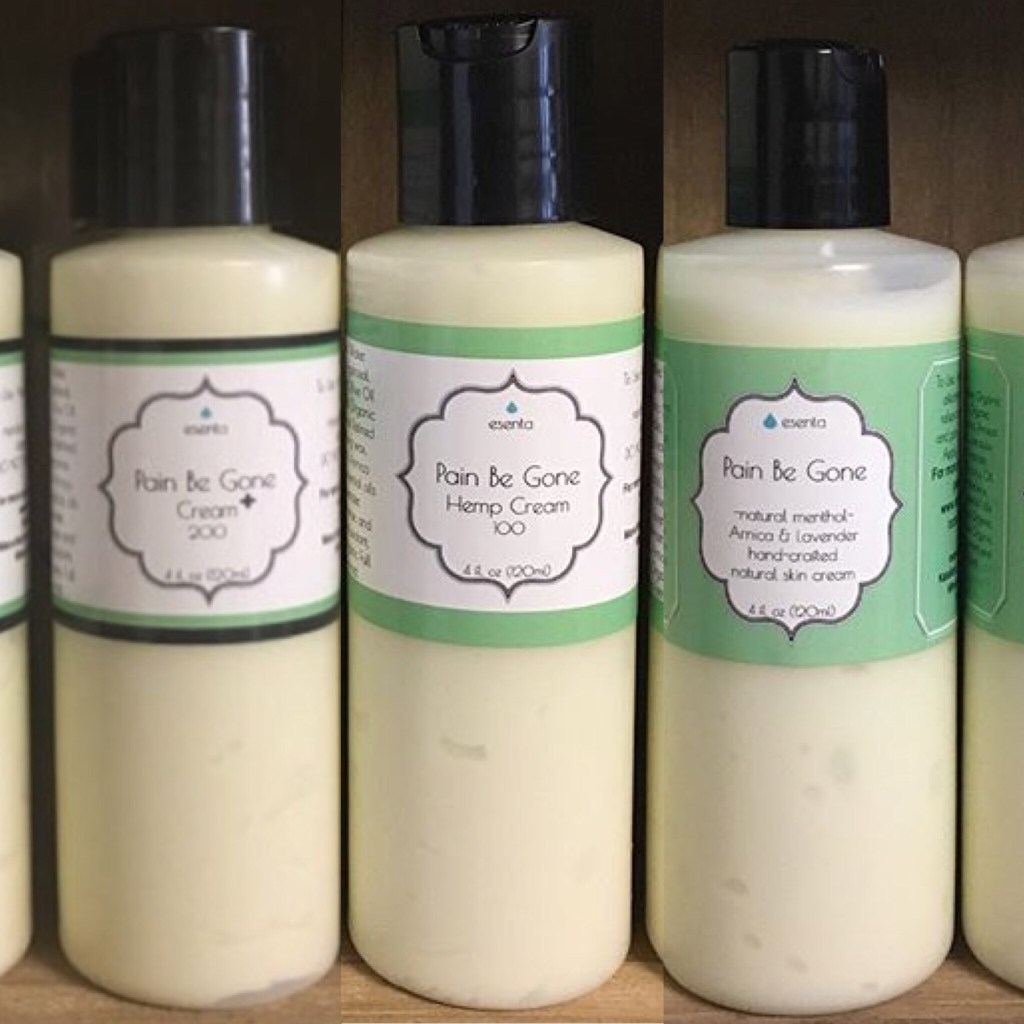
Skin Oils, Creams, and Lotions are a means of carrying essential oils onto the skin similar to massage. The primary difference between the two methods of application is that in this instance, oils that are more nourishing and specifically indicated for a condition or area of the skin, such as jojoba, camellia, and hazelnut, are chosen. When making skin oils and lotions it is recommended the dilution of essential oils is between 1.5%-3%. This would be equivalent to blending 9-18 drops (roughly 0.5 – 1 ml) of essential oils, into 1 oz. of base carrier oil or lotion.
Blend at 1-3 % or roughly 3-9 drops per Tablespoon of Carrier Oil/Lotion
This information is shared with the permission of Esenta – The Aromaticum App and was produced by Kathryn Delaney, Certified Clinical Aromatherapist.

 Roots of Alchemy