
Classes, education, Wellness

The Revival of Therapeutic Hydrosols

Historically called Flower water, Hydrosols are a “water solution” that is traditionally extracted through the steam distillation process of botanicals that is used to create essential oils. In the realm of aromatherapy, hydrosols are also known as hydrolates, hydrolats, floral waters and plant waters. In French, the term hydro, means “water” and late, is from the French lait, or “milk.” When hydrolates first come out of the still it often has a slightly milky appearance.

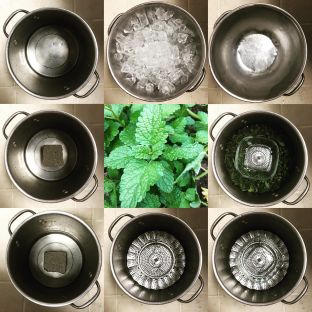
In the process of steam-distillation, water is boiled which creates steam that rises through a large amount of fresh botanical biomass. This steam is recondensed back into liquid with a cold-water coil, as this liquid gathers in what is called a Florentine flask, the essential oil, and recondensed water vapor separate, which results in two different substances. Just as in the case of essential oil production, differing methods and time of botanical harvest, produce varied amounts of hydrosol.

Unlike essential oils, hydrosols are not concentrated in volatile terpenes, and are therefore not flammable. The resulting fluid ranges in pH depending on the botanical being extracted, and carries more of an aromatic “imprint” of the original plant, than concentrated constituents. However, this does not remove them from therapeutic consideration.

The term “flower water” appears in U.S. Pharmacopeia of 1926, referencing Orange Flower Water as “Aqua Aurantum Fleur,” other botanical waters were simply referred to as: Rose Water, Fennel Water, etc., as well as “Aromatic Waters,” which were presented as distillates with an added small volume of the original volatile oil. One might ask, “what are flower waters doing in the USP of the past?” Flower waters were used in formulations of various remedies. While these substances have all but been removed from modern western medicine, their therapeutic value is beginning to be revived.
Hydrosol_Home_Still.jpg

Most often seen in skin care ingredients, hydrosols offer a tonifying benefit for the skin. Many companies pair floral hydrosols such as rose and lavender, with other tonifying astringents and soothing ingredients, such as witch hazel extract and aloe vera juice to create skin toners. I myself, use them as a water portion when I make my small batch creams, which can be found here: Pain Be Gone; Lavender; Calendula; custom scents are available.

I find that when I use hydrosols in my body care products I don’t need to use as much essential oil to scent them, which allows for a more affordable product for my customer, that also smells “more-true” to the plant. For instance, in my Lavender Lotion, which is made with organic infused lavender oil, organic lavender hydrosol, distilled water, emulsifying wax, and organic lavender essential oil, and a small bit of rosemary antioxidant as a preservative, I use a quarter less of essential oil than what is called for in a traditional batch, without losing any body of the scent.

Hydrosols have also been historically used to flavor pastries, to wash oneself, and the home with, bathed in, used on pets, poured into champagne, and diluted into water as a beverage. Hydrosols use is also beginning to be revived as a therapeutic when diluted in water (15-30ml- 1 L), and sipped on for three weeks, similar to ingesting therapeutic teas.

I will be offering a small workshop at the Good Medicine Confluence in Durango, in late July, showing people the basics of essential oil steam distillation, as well as how to create their own hydrosols with simple kitchen equipment. You can learn more about the confluence and the workshops I’ll be teaching here.
DIY, Wellness

DIY Natural Cold Remedy: Learn How to Make Your Own Oxymel

Colds and respiratory conditions tend to sneak up on us at the change of seasons. Rather than reach to an over-the counter remedy that removes the symptoms but prolongs a cold,  my favorite go-to remedy at the sign of the sniffles is my Oxymel.

To understand what Oxymel is, the word comes from the Greek language. “Oxy” (sour), and “Mel” (sweet) is a description of the flavor profile of this traditional remedy. Simply, Oxymel is a combination of Raw Apple Cider Vinegar and Honey. For decades modern herbalists have come to infuse these two substances  with a variety of herbs, which tailors the remedy and its effective outcomes.

I first experienced Oxymel while I was in herbalism school. I had a respiratory cold where my nose was running so badly that I was going through a pile of tissues. I sat in the furthest corner of a local coffee shop, struggling through homework, and a pile of waded up napkins. Unfortunately, I was also under a deadline to get my homework done for school, and found myself sacrificing self-care for meeting responsibility. (Note to self: Bad Vitalist!). As one of my professors used to say, “when you are an herbalist you grow to look forward to getting sick, just so you can try out the effectiveness of a remedy.”   

The next morning I decided to go to the store and get some ingredients for a remedy that I had learned about in school called “Oxymel”. It called for apple cider vinegar, honey, fresh turmeric, garlic, ginger, lemon and red pepper flakes. I purchased the necessary items at the store, wrote to my teacher to let her know I wouldn’t be in class that day, and  began making my brew immediately.

After four hours of infusing the honey and apple cider vinegar with the herbs, I strained the contents, combined the two infused liquids together, and took a shot glass of the formula. The formula had a kick of heat, but finished with a sweetness.  In a half hour I took another tablespoon. I repeated this two more times and went to bed. By the next morning I felt one hundred percent better. The shift in how I felt was so profound, and immediate, that I was amazed how sick I had been just 24 hours prior. Needless to say, Oxymel is now my go-to remedy any time I feel a hint of a cold.

To see how to make your own oxymel formula, visit my YouTube channel here. Making Oxymel isn’t an exact art. You can flavor your oxymel for your own palette. I made my original recipe with oranges, and peppers that I grow in my garden, along with some additional carminative seeds. 


Oxymel

To make your own oxymel you will need the following: 

500 ml raw local honey

500 ml raw apple cider vinegar

one handful of chopped raw turmeric, chopped

1 four” knot of fresh ginger root, chopped

2 full garlic bulbs, peeled and chopped

1 whole lemon, chopped (with skin)

one tsp. pepper flakes

In the recipe that I made on YouTube, in: DIY Cold Remedy: Learn How to Make Your Own Oxymel I added the optional ingredients of:

1 orange

6 small cinnamon sticks

1 cup of dried hawthorn berries

2 Tbsp. Fennel

Again, you can adjust your formula for your palette and what you have around the house. You could also add ingredients such as: horseradish, onions, wasabi, sage, herbs for the respiratory system, ect. Make sure you write down your recipe in case you want to make the same one again.

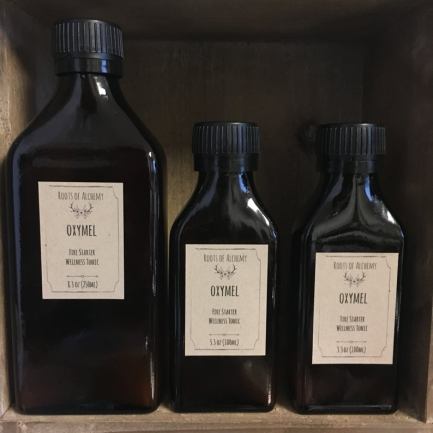
This will keep for 1 1/2 years if kept in the fridge. I personally go through what I make every year, so I have yet to have any go bad on me. Roots of Alchemy Fire Starter Oxymel has become one of my best selling products in the Winter Season. Roots of Alchemy Fire Starter Oxymel can be purchased on Etsy, here and is available for sale in two sizes.

Oxymel has become one of my most used and trusted remedies during the winter season. I’d love to hear about how my video inspired your creations. Be Well!

education, Wellness

Cannabinoids… It’s time to Connect The Dots

In the early 1900s, researchers made a discovery that provided a solution to many of the debilitating health conditions that had perplexed the medical profession for hundreds of years, we know it as Vitamin D. Now, nearly one hundred years later, we find ourselves in the midst of a similar pivotal discovery as scientists connect the dots between wellness, the endocannabinoid system, and phytochemicals found in the Cannabis and Hemp plant.

A necessary component in the workings of many bodily systems, Vitamin D revealed itself to be a foundational key to wellness. Researchers discovered that Vitamin D is created within the fatty tissues of the skin when an individual is exposed to sunlight, and that without this exposure individuals can establish a deficiency of Vitamin D, which can domino into a number of health conditions. They also observed that with supplementation of Vitamin D, many of the debilitating chronic conditions, including Rickets, were able to be reversed.

You may be asking: What is the purpose of drawing a connection between Vitamin D and the phytoconstituents found in Hemp?

In the mid-1990s researchers discovered what is now called the “Endocannabinoid System” as a complex molecular signaling system that exists in all mammals. This system plays a role in maintaining many of the bodily functions which help to maintain homeostasis. While we do create our own endocannabinoids, when we are under extreme amounts of stress, or have a build-up of chronic toxicity, our bodies have difficulty making our own endocannabinoids to regulate our system. Through the course of the last three decades, scientists have been able to establish that endocannabinoid receptors are found all throughout the body, giving them a wide variety of functions. Certain receptors are more concentrated in specific regions of the body. What has been defined as CB1 receptors are abundant in the central nervous system and found along the pathway of the brain and spinal cord, whereas what has been defined as CB2 receptors are more often found on immune cells, in the gastrointestinal tract, and in the peripheral nervous system.

The presence of endocannabinoid receptor locations throughout the body reveals just how important this system is for bodily maintenance. They help regulate the following:

Endocannabinoids are the chemical messengers that help to regulate the body’s processes by a complex signaling system. They help maintain optimal balance in the body, also known as homeostasis. When the endocannabinoid system is disrupted, any one of these things can fall out of balance. Dysregulation within the endocannabinoid system is thought to contribute to a wide variety of conditions. Some researchers are calling this a “Clinical Endocannabinoid Deficiency“.  If a person is unable to produce enough endocannabinoids within their system, or for some reason is unable to regulate them properly, they are more susceptible to illnesses that affect one or several of the functional systems of the body that it helps regulate. functions listed above.

Where do endocannabinoids come from? This question has another simple answer: the food that we eat.

The mammalian body system creates endocannabinoids with the help of fatty acids. Omega-3 fatty acids are especially important for this. Recent research in animal models has found a connection between diets low in omega-3s and mood changes caused by poor endocannabinoid regulation.


While more than 80 cannabinoids have been found to be present in marijuana, only the molecule of THC is psychoactive. Recent research has revealed that some of the other constituents that have been found to be abundant in the Cannabis species, such as cannabidiol, have well-documented biological effects of potential therapeutic interest, such as anti-anxiety, anticonvulsive, anti-nausea, anti-inflammatory and antitumor properties. These cannabinoids have been shown to fit the receptors within the endocannabinoid system, leading researchers to investigate the health benefits of supplementing with full-spectrum hemp and cannabis extracts, whom are seeing and documenting improvements in long-standing chronic health conditions.

As increasing amounts of evidence builds to support the use of hemp and cannabis extracts in daily wellness regimens, drug companies scramble to claim rights on the compounds of this plant species.

I am struck by the similarities within the discovery of the endocannabinoid system, and the discovery of Vitamin D. Considering that under the right conditions, i.e. exposure to adequate sunlight, one can make their own Vitamin D, and without adequate sun exposure, a deficiency in Vitamin D can ensure an array of various health conditions. We also have an innate endocannabinoid system, which acts as a messenger along our neural synapses. Research and individual experiences are revealing how supplementation with cannabinoids, such as cannabidiol, are helping to bring balance to long-standing conditions that have not been able to be helped by other remedies or medications. One has to begin to wonder if we are living in a similar time to the early 1900s when the health discovery of Vitamin D was uncovered, and what life would look like if Vitamin D supplementation were controlled by drug companies….

It is time that we connect the dots.

________________________________________________________________________

Kathryn Delaney is a Certified Nutritionist, Herbalist and Aromatherapist, and is the Director of the Aromatherapy Program and Medicine Making Teacher at the Colorado School of Clinical Herbalism.