
Classes, education, Wellness

The Revival of Therapeutic Hydrosols

Historically called Flower water, Hydrosols are a “water solution” that is traditionally extracted through the steam distillation process of botanicals that is used to create essential oils. In the realm of aromatherapy, hydrosols are also known as hydrolates, hydrolats, floral waters and plant waters. In French, the term hydro, means “water” and late, is from the French lait, or “milk.” When hydrolates first come out of the still it often has a slightly milky appearance.

In the process of steam-distillation, water is boiled which creates steam that rises through a large amount of fresh botanical biomass. This steam is recondensed back into liquid with a cold-water coil, as this liquid gathers in what is called a Florentine flask, the essential oil, and recondensed water vapor separate, which results in two different substances. Just as in the case of essential oil production, differing methods and time of botanical harvest, produce varied amounts of hydrosol.

Unlike essential oils, hydrosols are not concentrated in volatile terpenes, and are therefore not flammable. The resulting fluid ranges in pH depending on the botanical being extracted, and carries more of an aromatic “imprint” of the original plant, than concentrated constituents. However, this does not remove them from therapeutic consideration.

The term “flower water” appears in U.S. Pharmacopeia of 1926, referencing Orange Flower Water as “Aqua Aurantum Fleur,” other botanical waters were simply referred to as: Rose Water, Fennel Water, etc., as well as “Aromatic Waters,” which were presented as distillates with an added small volume of the original volatile oil. One might ask, “what are flower waters doing in the USP of the past?” Flower waters were used in formulations of various remedies. While these substances have all but been removed from modern western medicine, their therapeutic value is beginning to be revived.
Hydrosol_Home_Still.jpg

Most often seen in skin care ingredients, hydrosols offer a tonifying benefit for the skin. Many companies pair floral hydrosols such as rose and lavender, with other tonifying astringents and soothing ingredients, such as witch hazel extract and aloe vera juice to create skin toners. I myself, use them as a water portion when I make my small batch creams, which can be found here: Pain Be Gone; Lavender; Calendula; custom scents are available.

I find that when I use hydrosols in my body care products I don’t need to use as much essential oil to scent them, which allows for a more affordable product for my customer, that also smells “more-true” to the plant. For instance, in my Lavender Lotion, which is made with organic infused lavender oil, organic lavender hydrosol, distilled water, emulsifying wax, and organic lavender essential oil, and a small bit of rosemary antioxidant as a preservative, I use a quarter less of essential oil than what is called for in a traditional batch, without losing any body of the scent.

Hydrosols have also been historically used to flavor pastries, to wash oneself, and the home with, bathed in, used on pets, poured into champagne, and diluted into water as a beverage. Hydrosols use is also beginning to be revived as a therapeutic when diluted in water (15-30ml- 1 L), and sipped on for three weeks, similar to ingesting therapeutic teas.

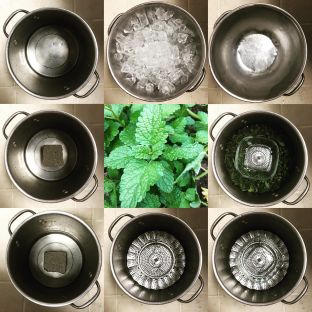
I will be offering a small workshop at the Good Medicine Confluence in Durango, in late July, showing people the basics of essential oil steam distillation, as well as how to create their own hydrosols with simple kitchen equipment. You can learn more about the confluence and the workshops I’ll be teaching here.

Classes

Do It Your Self Skin Care: Online Medicine Making Series Coming Soon!

I have been making natural skin care for more than 15 years and am excited to share that I will be offering some topical skin care medicine making classes online starting in October. The first weekly series begins in October 8th, if you would like make your own skin care, or deepen your relationship with medicine making, this series is for you!
Beginning October 8th, 2019 Esenta-edu will be offering the first Medicine-Making Series focused on Topical Skin Care, and it is just in time for the holiday season! This will be a 6-week series designed to build a solid foundation to making your own skin care products including lip balms, salves, massage oils, body lotions, face serums, and even more luxurious creations to adorn your most delicate bits of your body temple. Each Tuesday evening from 6-8:00pm (and sometimes until 8:30), Mtn Standard Time, we will join together so that I can demonstrate and explain how to make your own skin care.
During Class No. 1, we will dive into carrier oils and sourcing ingredients.
 
Class No. 2 I’ll show you how to make infused oils and massage oils.
 
During Class No. 3 you will learn how to transform these infused oils into luxurious lip balms and salves.
 
Class No. 4 We will be making body butters and whipped butters to adorn and lavish all over your body temple.
 
During Class No. 5 I’ll show you how to make your own deodorant, so you can choose what you want on your pits! (This has become one of my all time best selling products.)
 
During our final Class No. 6 I’ll demonstrate how to make your own body and face lotions using all of the knowledge that we’ve built on so far. This allows you the confidence to customize your skin care with infused oils you’ve made yourself while leaving out all the toxic chemicals that are in commercial skin care.
 
Reserve your Early Bird space by signing up through Teachable. (https://esenta-edu.teachable.com/purchase?product_id=1362123 )
 
A payment plan option is also available: https://esenta-edu.teachable.com/purchase?product_id=1362132
 
Please note that the price will be increasing October 1st to $360
 
I will be using an assortment  of materials to make the examples of skin care botanicals that I will be demonstrating how to prepare.  A materials list will be sent out to students after confirmation of receipt of payment, as well as a link to purchase materials through my Etsy shop for ease of shipment, if you wish to purchase materials from me.  You are welcome to use the materials that you have at home, purchase your materials locally, or purchase what you need from my Etsy shop. As a service, I will be putting together packages of materials that can be purchased from the course separately via my Etsy site “RootsOfAlchemy” in late September for those items that you wish to make. Course materials will be shipped out in early October for the class series to begin October 8th, which will allow for organization of course materials to be prepared and shipped in bulk.
 
Please don’t hesitate to reach out with any questions, comments, or requests for more information on the series, or upcoming workshops and retreats. You can contact me through rootsofalchemy@gmail.com
 
If you are interested in having immediate access in knowing how to use Essential Oils safely in and around the home, The Esenta Aromaticum App is now available for iPhone systems, detailing the safe use and applications of more than 100 essential oils!
 
If you are local to the Front Range Area and would prefer a hands on experience in a classroom setting, reach out and let me know!
Classes, education

Lovely Lavender Cream: you can make it from the bounty in your backyard

We made a Lavender Cream in class today without a single drop of Lavender essential oil.

Body cream is a combination of water components and oil complements, joined together with either a wax or emulsifying agent.
I have always been curious if it was possible to scent creams without an essential oil, so we decided to give it a try.

We made a recipe of 32 ounces of cream, which, if made as a traditional lotion recipe, would call for a 2 % dilution of essential oil. A 2% dilution of 32 fluid oz. of cream is nearly 20 milliliter of essential oil, which is 2/3 of 1 oz.

We started by infusing olive oil with powdered lavender buds. To this we added jojoba oil, lavender hydrosol, aloe juice and distilled water with some emulsifying wax, rosemary antioxidant and citric acid.

It resulted in a lovely, icing textured lotion that many students commented they wanted to eat, because it smelled so delicious.

We infused 80 grams of lavender buds in oil, which, if made into an essential oil would be around 13 drops.

We soaked this herb with 15 ml of lavender tincture, which it took about 5 grams of lavender buds to make (1:3 ratio).

While this was happening I drew a few diagrams to reveal how people can make hydrosol in their kitchen with basic wares.

In total we used under 100 grams of herbal material in addition to 2 oz of hydrosol, to scent 32 oz of cream. If this amount of lavender buds were distilled, it would make around 16 drops of essential oil…. not even a single millimeter, whereas most recipes call for 2%, or nearly 20 ml of essential oil, for the same volume of cream.  That’s pretty wild, right? Especially when one considers that it would take more than 8 pounds of plant material, and quite a bit of labor, to produce the 20ml of essential oil, and that many people presume this wouldn’t be enough essential oil and would add more.

We were all excited to discover that we can create wonderfully luxurious things from the bounty in our backyards. While it may be difficult to grow 8 lbs of lavender, it is much more realistic and doable to grow 4 oz. of lavender, and a bit perhaps a doubling of that to make your own hydrosol.

If only you could smell this cream!

If you would like to learn to make it yourself, I can send you the ingredients and teach you how to make it 🙂

Classes will be available online soon! Contact me at oilartisan@gmail.com for more information.

To see how to make a simple lotion with just a few ingredients, check out this video I made on YouTube.

#diy

#lavendercream

#beallnatural

#besustainable