
Blog

education, Essential Oils, Wellness

Historical Solutions to Airborne Illness: Aromatics

By Kathryn Delaney, CCA, CCH, CN

With what looks to be escalating news regarding the coronavirus (Covid-19), health professionals are still learning how it spreads, to what extent it can spread, and the severity of illnesses that it causes.

There is currently no vaccine to prevent COVID-19. The best way to prevent illness is to keep up your immune system and avoid being exposed. Like other respiratory illnesses, and similar to the common cold, the virus is thought to spread mainly from person-to-person. Either between people who are in close contact with one another (within about 6 feet), or through respiratory droplets produced when an infected person coughs or sneezes. These droplets can land in the mouths or noses of people who are nearby or possibly be inhaled into the lungs.

Essential oils are unique allies in times of airborne illness because of their volatile nature and their inherent anti-bacterial, anti-microbial and sometimes anti-viral qualities. Essential oils are distilled from plants into concentrated volatile substances that can not only purify the air… this quality makes them extremely effective for respiratory conditions by way of inhalation. It is this diffusive quality that allows them to be used to strengthen the immune system.

Historically aromatic herbs and spices have proven useful in times of airborne illnesses because of their anti-microbial, anti-bacterial and anti-viral properties. Aromatic botanicals have been used for centuries in religious ceremonies that use smudging as a means of spiritual purification, and some traditions of the past and present, continue to smudge people and public areas as a means to purify the air, such as: juniper, cedar, cypress, and other botanicals.

Several ways you can use the benefits of anti-viral essential oils are detailed below:

  • Steam Inhalation – Simply boil a soup pot filled with water, remove from stove, and add 4 drops of any singular or combination of any of the following: Bay Laurel, Tea Tree, Cajeput, Thyme, Niaouli, or Ravintsara.
  • Passive Diffusion – Set a bowl of water, with a few drops of the essential oils listed above, in a warm sunny window. Alternatively, you can place 8-10 drops in a inhaler to breathe throughout the day.
  • Room Diffusers and Atomizers are also practical ways to disperse the anti-viral qualities of essential oils into larger spaces, such as living rooms, etc.
  • Topically, a person can apply Bay Laurel, Cajeput, Niaouli, or any of the Eucalyptus Essential Oils on the lymph nodes and adrenal glands after a shower. This will help to strengthen the immune system. To do this, dilute a total of 3-10 drops of a single or combination of these oils in an unscented lotion or vegetable oil, and massage on the sides of the neck, arm pits, lower back and just above the kidney.
  • Disinfectant Room sprays – Add 20-30 drops of essential oil to 4 oz of purified water. Shake well before using.
  • Household cleaners – Add 20-30 drops of essential oil to a spray bottle with 6 oz water and 2 oz white vinegar. Shake before use, and make sure you test on a corner of surface before using on the entire surface.

Many of the discoveries of the benefits of using aromatic plants to prevent and treat respiratory conditions, came out of the European area.

In the 16th century, also known as the Golden Age of Herbalists, pomanders of myrrh, sandalwood, cloves, nutmeg and rose, were popular, as well as lemon peel, juniper oil, camphor and marjoram. Pomanders were small, ball-like vessels that were stuffed with aromatic plants. These were worn around the neck or on a belt.

In a popular illustration from the 17th Century, a doctor is pictured wearing protective clothing that can be best described as a hood with a beak. This vessel is said to have been filled with cinnamon, clove and other aromatic herbs. (Battaglia, 2008)

Doctors Visit 17c.

During the 19th century, someone observed the low incidence of tuberculosis in the flower-growing districts of France, particularly in the south. It was here that someone made note that the workers who processed flowers and herbs remained free of the respiratory illness that was common at that time. This led to published studies showing that essential oils were able to kill the micro-organisms of glandular and yellow fever. They particularly noted the properties of oregano, Chinese cinnamon, angelica and geranium. (Battaglia, 2008)

Epidemics of the past were worsened by several factors, including:

  • Rapid growth of urban areas with poor sanitation
  • Horrific working conditions in factories – dawn to dusk, 7-day work week
  • Epidemic vitamin D deficiency – rickets in some urban areas nearly universal
  • Deterioration of the diet
  • Sugar and white flour as staple foods for the first time in history


As a reminder, Center for Disease Control recommends these everyday preventive actions to help prevent the spread of respiratory diseases, including: “Avoid close contact with people who are sick; and washing your hands often with soap and water for at least 20 seconds, especially after going to the bathroom; before eating; and after blowing your nose, coughing, or sneezing. If soap and water are not readily available, use an alcohol-based hand sanitizer with at least 60% alcohol. Always wash hands with soap and water if hands are visibly dirty.”

To keep up your healthy immune response:

  • Reduce unnecessary stress. Stress has been shown to be the first domino that effects all illnesses.
  • Make sure you get adequate sleep. Sleep deprivation causes elevated cortisol levels and results in impaired immune function.
  • Become replete in Vitamin D.
  • Reduce Sugar intake. Americans consume an average of five ounces (> ¼ lb.) of sugar every day, either consciously added to their food or hidden in processed foods. Scientific studies have found that amounts less than this can profoundly suppress the immune system.


It is key to remember how important basic self-care is, in building our immunity, especially as modern lifestyles seem to command for stressful ways of living. While many of us may be familiar with the relaxing benefits that aromatherapy can have on our stress levels, it’s pretty cool that these aromatic allies have qualities that have proven them to be invaluable during times of legendary epidemics.


About the Author: Kathryn Delaney, CCA, CCH, CN is the Director of Aromatherapy 100 Course at the Colorado School of Clinical Herbalism.

For more information on the new course, please visit: For more information on the upcoming course, starting April 14th, please visit: https://clinicalherbalism.com/programs-courses/aromatherapy/ or write to Kathryn.delaney@clinicalherbalism.com
 

Wellness

Sustainability Considerations and Essential Oils, a Discussion

In this short video Lisa Ganora and Kathryn Delaney, of CSCH, discuss the sustainability of various essential oils.

Kathryn Delaney, CCA, CCH, CN, has more than 25 years of cultivated study in botanical medicine making and is currently building a the new certification course for the Colorado School of Clinical Herbalism that begins in April 2020.

For more information on the new 100-hour Vitalist Aromatherapy Course at CSCH, visit: https://clinicalherbalism.com/programs-courses/aromatherapy/

For specific questions about the course, the course schedule or the syllabus, please write to Kathryn.delaney@clinicalherbalism.com

Wellness

Are Essential Oils Supplements?

In this video Lisa Ganora and Kathryn Delaney, discuss essential oils and how they compare to other forms of botanical therapeutics.

Kathryn Delaney is a Certified Clinical Aromatherapist, Nutritionist and Herbalist with more than 25 years of cultivated study in botanical medicine making. She is currently building a Aromatherapy Certification Course for the Colorado School of Clinical Herbalism. The Vitalist Aromatherapy Course runs on Tuesday evenings and starts in April 2020.

To learn more about the upcoming Aromatherapy Certification Course at CSCH, please visit: https://clinicalherbalism.com/programs-courses/aromatherapy/

If you have specific questions about the program, please write to Kathryn.delaney@clinicalherbalism.com

In 2011, Kathryn Delaney created and release, Esenta: The Aromaticum App on iOS systems. Esenta’s Aromaticum App was created to lend assistance in choosing the appropriate essential oils for a particular use, and to help you get to know the range of uses applicable. My goal is to provide you with information that empowers the safe use of essential oils in and around the home, in aim that it assists to improve the quality of everyday life. To purchase this App visit: https://itunes.apple.com/us/app/esenta/id1073202895

To schedule a session, a custom blend or an aromatic reading, please write to rootsofalchemy@gmail.com

I look forward to offering more videos in the future that focus on specific essential oils, where they come from, how they are processed and safety considerations. Contributions and donations are always appreciated!!

If you have any comments or questions, and would like me to focus the content on any specific area of interest, please let me know.

Sincerely,

Kathryn Delaney, CCA, CH, BA, BS

Please subscribe to my YouTube Channel and Blog if you are interested in learning more about essential oils, aromatherapy, and botanical medicine making.

For a longer video discussion on this topic, click here.

Classes, education, Wellness

The Revival of Therapeutic Hydrosols

Historically called Flower water, Hydrosols are a “water solution” that is traditionally extracted through the steam distillation process of botanicals that is used to create essential oils. In the realm of aromatherapy, hydrosols are also known as hydrolates, hydrolats, floral waters and plant waters. In French, the term hydro, means “water” and late, is from the French lait, or “milk.” When hydrolates first come out of the still it often has a slightly milky appearance.

In the process of steam-distillation, water is boiled which creates steam that rises through a large amount of fresh botanical biomass. This steam is recondensed back into liquid with a cold-water coil, as this liquid gathers in what is called a Florentine flask, the essential oil, and recondensed water vapor separate, which results in two different substances. Just as in the case of essential oil production, differing methods and time of botanical harvest, produce varied amounts of hydrosol.

Unlike essential oils, hydrosols are not concentrated in volatile terpenes, and are therefore not flammable. The resulting fluid ranges in pH depending on the botanical being extracted, and carries more of an aromatic “imprint” of the original plant, than concentrated constituents. However, this does not remove them from therapeutic consideration.

The term “flower water” appears in U.S. Pharmacopeia of 1926, referencing Orange Flower Water as “Aqua Aurantum Fleur,” other botanical waters were simply referred to as: Rose Water, Fennel Water, etc., as well as “Aromatic Waters,” which were presented as distillates with an added small volume of the original volatile oil. One might ask, “what are flower waters doing in the USP of the past?” Flower waters were used in formulations of various remedies. While these substances have all but been removed from modern western medicine, their therapeutic value is beginning to be revived.

Hydrosol_Home_Still.jpg

Most often seen in skin care ingredients, hydrosols offer a tonifying benefit for the skin. Many companies pair floral hydrosols such as rose and lavender, with other tonifying astringents and soothing ingredients, such as witch hazel extract and aloe vera juice to create skin toners. I myself, use them as a water portion when I make my small batch creams, which can be found here: Pain Be Gone; Lavender; Calendula; custom scents are available.

I find that when I use hydrosols in my body care products I don’t need to use as much essential oil to scent them, which allows for a more affordable product for my customer, that also smells “more-true” to the plant. For instance, in my Lavender Lotion, which is made with organic infused lavender oil, organic lavender hydrosol, distilled water, emulsifying wax, and organic lavender essential oil, and a small bit of rosemary antioxidant as a preservative, I use a quarter less of essential oil than what is called for in a traditional batch, without losing any body of the scent.

Hydrosols have also been historically used to flavor pastries, to wash oneself, and the home with, bathed in, used on pets, poured into champagne, and diluted into water as a beverage. Hydrosols use is also beginning to be revived as a therapeutic when diluted in water (15-30ml- 1 L), and sipped on for three weeks, similar to ingesting therapeutic teas.

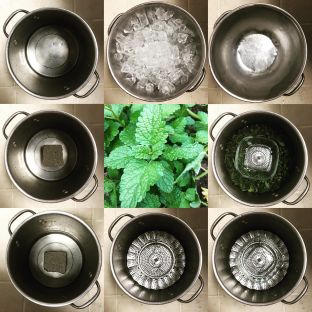
I will be offering a small workshop at the Good Medicine Confluence in Durango, in late July, showing people the basics of essential oil steam distillation, as well as how to create their own hydrosols with simple kitchen equipment. You can learn more about the confluence and the workshops I’ll be teaching here.

DIY, Wellness

DIY Natural Cold Remedy: Learn How to Make Your Own Oxymel

Colds and respiratory conditions tend to sneak up on us at the change of seasons. Rather than reach to an over-the counter remedy that removes the symptoms but prolongs a cold,  my favorite go-to remedy at the sign of the sniffles is my Oxymel.

To understand what Oxymel is, the word comes from the Greek language. “Oxy” (sour), and “Mel” (sweet) is a description of the flavor profile of this traditional remedy. Simply, Oxymel is a combination of Raw Apple Cider Vinegar and Honey. For decades modern herbalists have come to infuse these two substances  with a variety of herbs, which tailors the remedy and its effective outcomes.

I first experienced Oxymel while I was in herbalism school. I had a respiratory cold where my nose was running so badly that I was going through a pile of tissues. I sat in the furthest corner of a local coffee shop, struggling through homework, and a pile of waded up napkins. Unfortunately, I was also under a deadline to get my homework done for school, and found myself sacrificing self-care for meeting responsibility. (Note to self: Bad Vitalist!). As one of my professors used to say, “when you are an herbalist you grow to look forward to getting sick, just so you can try out the effectiveness of a remedy.”   

The next morning I decided to go to the store and get some ingredients for a remedy that I had learned about in school called “Oxymel”. It called for apple cider vinegar, honey, fresh turmeric, garlic, ginger, lemon and red pepper flakes. I purchased the necessary items at the store, wrote to my teacher to let her know I wouldn’t be in class that day, and  began making my brew immediately.

After four hours of infusing the honey and apple cider vinegar with the herbs, I strained the contents, combined the two infused liquids together, and took a shot glass of the formula. The formula had a kick of heat, but finished with a sweetness.  In a half hour I took another tablespoon. I repeated this two more times and went to bed. By the next morning I felt one hundred percent better. The shift in how I felt was so profound, and immediate, that I was amazed how sick I had been just 24 hours prior. Needless to say, Oxymel is now my go-to remedy any time I feel a hint of a cold.

To see how to make your own oxymel formula, visit my YouTube channel here. Making Oxymel isn’t an exact art. You can flavor your oxymel for your own palette. I made my original recipe with oranges, and peppers that I grow in my garden, along with some additional carminative seeds. 


Oxymel

To make your own oxymel you will need the following: 

500 ml raw local honey

500 ml raw apple cider vinegar

one handful of chopped raw turmeric, chopped

1 four” knot of fresh ginger root, chopped

2 full garlic bulbs, peeled and chopped

1 whole lemon, chopped (with skin)

one tsp. pepper flakes

In the recipe that I made on YouTube, in: DIY Cold Remedy: Learn How to Make Your Own Oxymel I added the optional ingredients of:

1 orange

6 small cinnamon sticks

1 cup of dried hawthorn berries

2 Tbsp. Fennel

Again, you can adjust your formula for your palette and what you have around the house. You could also add ingredients such as: horseradish, onions, wasabi, sage, herbs for the respiratory system, ect. Make sure you write down your recipe in case you want to make the same one again.

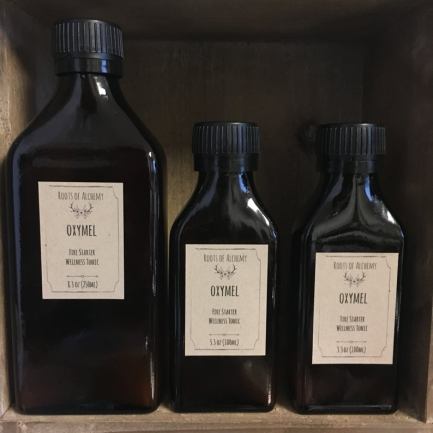
This will keep for 1 1/2 years if kept in the fridge. I personally go through what I make every year, so I have yet to have any go bad on me. Roots of Alchemy Fire Starter Oxymel has become one of my best selling products in the Winter Season. Roots of Alchemy Fire Starter Oxymel can be purchased on Etsy, here and is available for sale in two sizes.

Oxymel has become one of my most used and trusted remedies during the winter season. I’d love to hear about how my video inspired your creations. Be Well!